

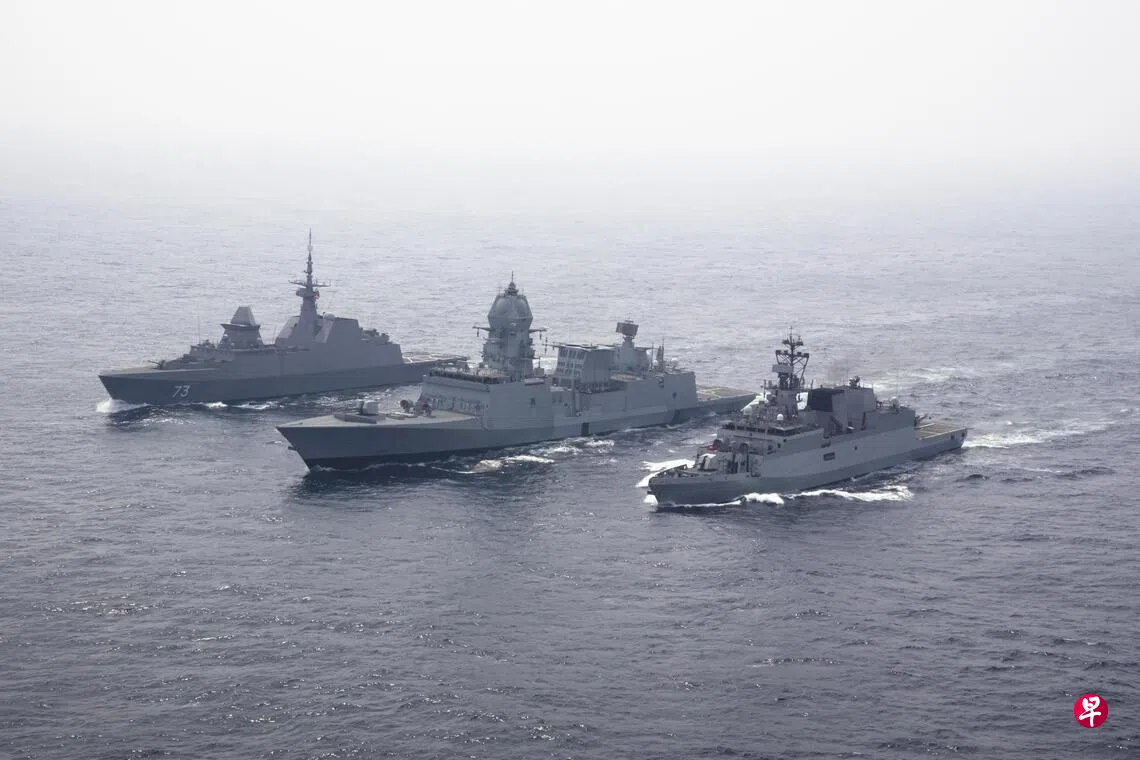
The Singapore and Indian navies are carrying out their bilateral exercise featuring expert exchanges on anti-submarine warfare, submarine rescue and unmanned systems.
The Singapore Armed Forces (SAF) has also taken the opportunity to learn from their interactions with the Indian Navy’s P-8 maritime patrol aircraft, in preparation for their integration of the aircraft into their warfighting ecosystem in the coming years.
The 33rd Singapore-India Maritime Bilateral Exercise (SIMBEX) is taking place from 21 to 26 October in Visakhapatnam, eastern India, and the nearby Bay of Bengal.
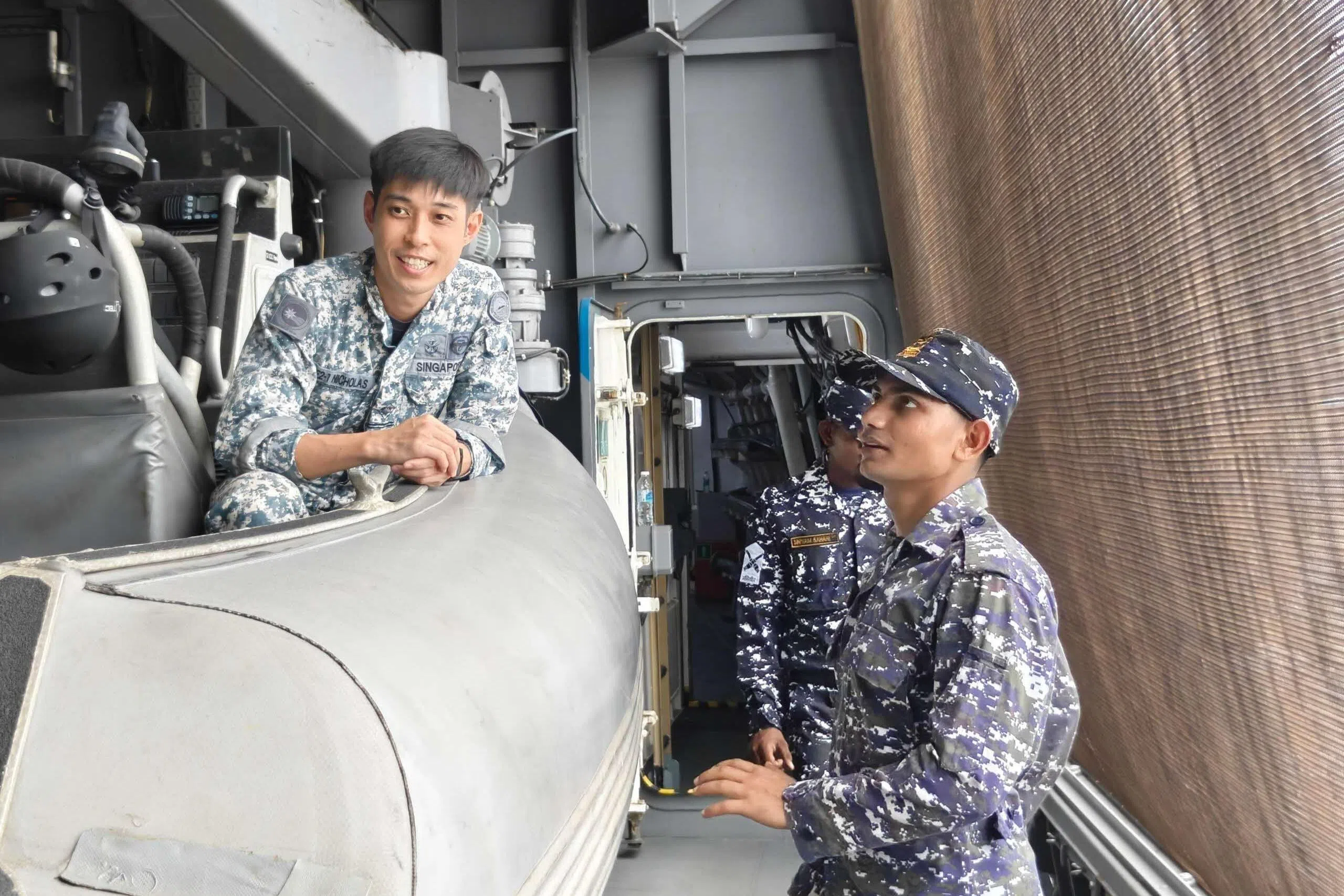
The Republic of Singapore Navy (RSN) deployed the frigate RSS Supreme, while the Indian Navy deployed the Nilgiri-class frigate INS Nilgiri, the Kamorta-class corvette INS Kamorta and a Sindhughosh-class submarine. The exercise comprises shore and sea phases.
Singapore’s Ministry of Defence said in a statement on Monday (26 October) that the shore phase included joint planning, professional exchanges and sporting activities. Both navies also shared operational experience and best practices in unmanned systems operations, submarine rescue and maritime aviation.
The sea phase covered advanced warfare drills, including live naval gun firing, air defence and anti-submarine warfare, to hone combat capabilities and improve interoperability. The exercise concluded with a sail-past.
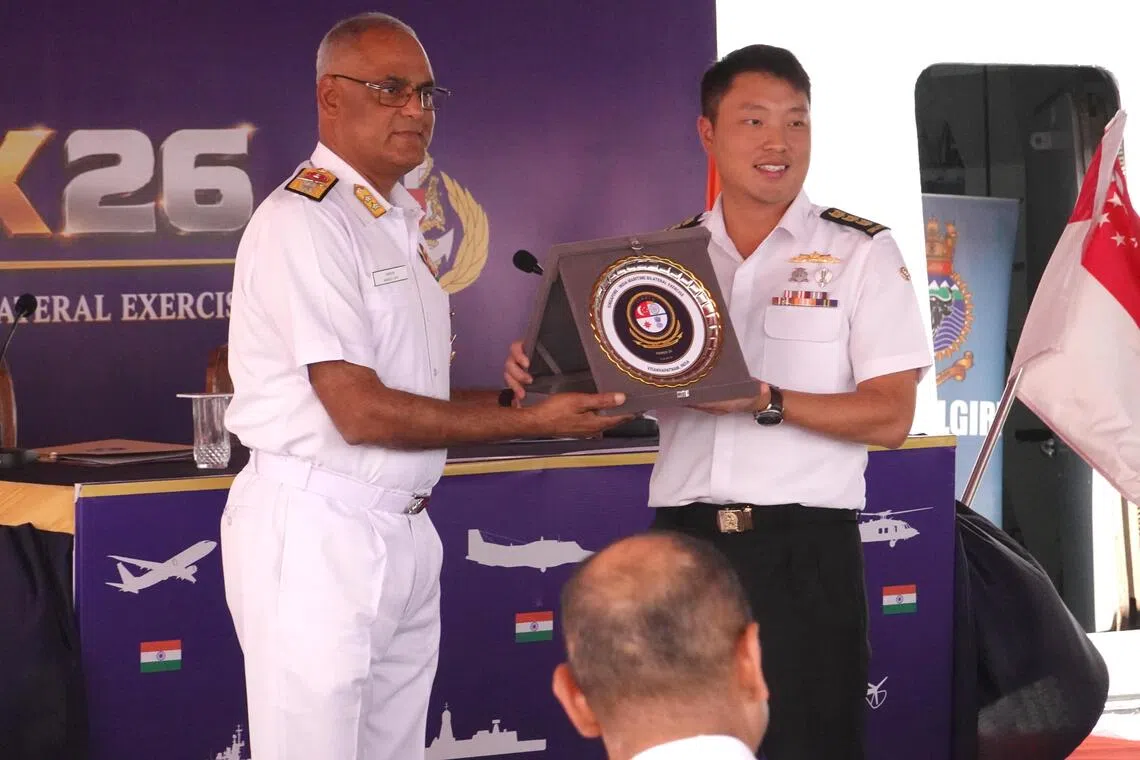
Colonel Bertram Ang, commander of the RSN’s Fleet, who took part in the exercise, said at the opening ceremony last Wednesday (21 October) that the exercise continues to provide a platform for the two navies to hone their warfighting capabilities, deepen mutual understanding and build lasting ties.
He expressed particular appreciation for the opportunity to interact with the Indian Navy’s P-8 maritime patrol aircraft. “As the Singapore Navy prepares to integrate the Poseidon 8 platform into our own warfighting ecosystem in the coming years, this provides us with an invaluable opportunity to learn from the Indian Navy.”
First phase of navy’s maritime security capability renewal completed
In September last year, Singapore announced the purchase of four Boeing P-8A maritime patrol aircraft to replace its Fokker 50 maritime patrol aircraft, which have been in service since 1993. The purchase completes the first phase of the SAF’s maritime security capability renewal, strengthening Singapore’s maritime situational awareness and ability to respond to underwater threats.
The P-8A has anti-submarine and anti-surface warfare capabilities and is equipped with advanced sonobuoys, acoustic processing systems and lightweight torpedoes. It can also detect and track maritime targets using radar and other sensors.
SIMBEX began in 1994 as Exercise Lion King, with a focus on anti-submarine training. Over more than 30 years, it has gradually expanded to include maritime security and integrated operations across the air, surface and underwater domains. It is one of the RSN’s long-standing bilateral maritime exercises.
The two navies signed an agreement on submarine rescue support and cooperation in 2021. This year’s expert exchanges provided further opportunities to share relevant experience and practices.
Singapore and India’s shared interests extend beyond traditional maritime security
Rear Admiral Manoj Jha, chief staff officer (Operations) of the Indian Navy’s Eastern Naval Command, said at the opening ceremony that the exercise had been held every year without interruption since its inception. Even during COVID-19, the two navies conducted the exercise through online planning and contactless operations at sea.
He noted that previous editions had included multiple live-firing drills and submarine participation, as well as missile firings. “These are examples of the professional trust between the two navies.”
He also said the sea was central to Singapore and India’s national interests and an economic lifeline for both countries. Their prosperity depended on secure sea lanes, resilient supply chains and a stable regional environment.
“Our common interests extend well beyond traditional maritime security. We must work together to address piracy, maritime terrorism, illegal trafficking, threats to critical maritime infrastructure, and emerging conventional and asymmetric challenges.”
