

Singapore has substantial geothermal resources deep underground, with preliminary estimates putting their energy potential at more than 60 times the country’s current annual electricity consumption. Singapore’s Energy Market Authority (EMA) will begin the next phase of its study at the end of this year to further assess the feasibility of using geothermal energy for electricity generation, cooling and heating.
Minister for Energy, Trade and Industry (Energy and Industry) Dr Tan See Leng announced this in his opening address at Singapore International Energy Week on Monday (26 October).
EMA had earlier appointed consultants to conduct non-invasive geophysical surveys from 2024 to 2026, which confirmed substantial geothermal energy resources deep beneath Singapore. Preliminary estimates put the technical potential of these resources at more than 60 times Singapore’s current annual electricity consumption of 60 terawatt-hours (TWh).
The non-invasive surveys include aerial measurements of the Earth’s gravitational field and magnetic signals from rocks, as well as measurements of underground electrical resistivity. They are being conducted by a consortium of leading global consultancies, including energy giant Chevron, geophysical survey services company Metatek Group and Singapore’s Surbana Jurong.
The team found high-temperature geothermal resources several kilometres beneath Singapore that could be suitable for power generation. Lower-temperature geothermal resources were also found at shallower depths, offering potential for industrial heating and cooling through heat pumps and absorption chillers.
Further research is needed to validate estimates of Singapore’s technical geothermal potential and determine the total amount of geothermal energy that can be extracted in practice.
EMA called for research proposals in April this year and has commissioned a consortium comprising Surbana Jurong and Canadian engineering and geoscience consultancy GLJ to conduct a feasibility study on a potential next-generation geothermal power plant.
The study is expected to take about 15 months and will cover safety considerations, technical feasibility and the cost of producing geothermal energy.
Dr Tan said that as Singapore’s geothermal resources are located several kilometres underground, the amount of electricity it can eventually generate will depend on the cost and technical feasibility of extracting these resources, as well as the pace of advances in deep drilling technology. Singapore’s densely populated urban environment will also affect how many geothermal power plants can feasibly be deployed.
He said no decision had been made on whether to deploy geothermal power generation. The government would explore the possibilities cautiously, with safety as its top priority.
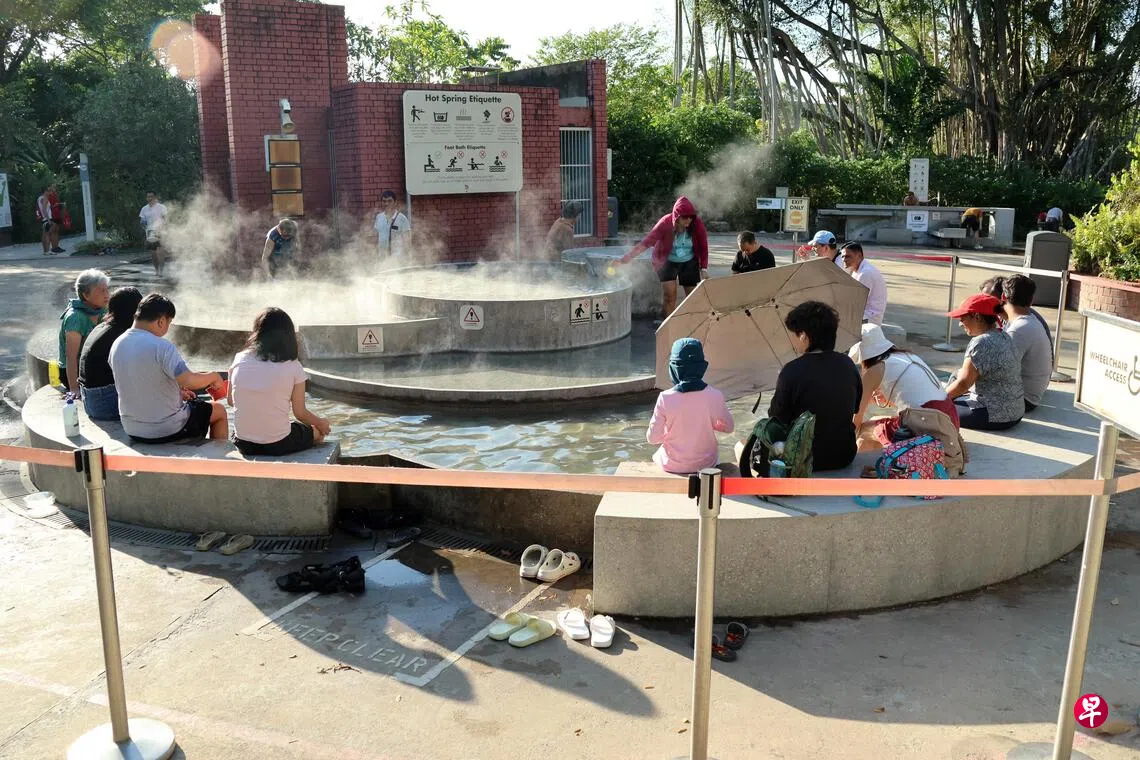
The authorities have not disclosed the locations for the next phase of the study. Lianhe Zaobao (LHZB) reported last year that surveys had achieved a breakthrough, establishing that temperatures 1.76 kilometres beneath Sembawang exceeded 120 degrees Celsius. Its geothermal potential is greater than that of the Admiralty area, making it the most promising location identified so far, with the potential to generate electricity at lower cost and with lower carbon emissions.
Puah Kok Keong, chief executive of EMA, said: “Geothermal energy is an indigenous source of clean energy that can provide constant power, and can potentially play an important role in our energy mix. If proven to be viable for electricity generation, Singapore’s geothermal energy resources will strengthen our energy resilience and support the decarbonisation of the power sector.”
New $75 million initiative to advance decarbonisation technologies
Dr Tan also announced the launch of the $75 million Power Decarbonisation Funding Initiative to develop and advance low-carbon technologies.
Launched by Singapore’s EMA and the Advance Energy and Decarbonisation Office at the Agency for Science, Technology and Research (A*STAR), the initiative forms part of the Decarbonisation Grand Challenge, for which the government allocated $800 million under the Research, Innovation and Enterprise 2030 Plan in March this year.
The initiative will focus on technical challenges in hydrogen, solar and biomass energy. It will support laboratory research to advance the scientific development of emerging low-carbon technologies, as well as testing, validation and pilot projects for more mature technological solutions.
Technologies to be developed include those that allow power plant burners to switch from hydrogen to backup fuel within 10 minutes while maintaining stable combustion, lower-cost solar structural systems with a smaller carbon footprint that can be installed on unconventional surfaces without compromising structural strength or waterproofing, and versatile, low-cost technologies to turn biomass ash from different feedstocks into useful products.
The two agencies will also set aside $25 million of the funding under the Decarbonisation Research for Industry, Ventures, and Enterprise programme to support company-led development projects, accelerating research and development of low-carbon technologies to decarbonise the power sector.
Companies and technology providers can jointly develop solutions with public research institutions, sharing the investment in research and development. Eligible projects can receive government funding covering up to 75% of research and development costs.
