

Transboundary haze is a difficult problem to tackle, with challenges ranging from gathering evidence to securing overseas companies’ cooperation with investigations. The Singapore government is reviewing the Transboundary Haze Pollution Act and preparing legislative amendments to close enforcement gaps, strengthen corporate accountability and take decisive action against those responsible for transboundary haze.
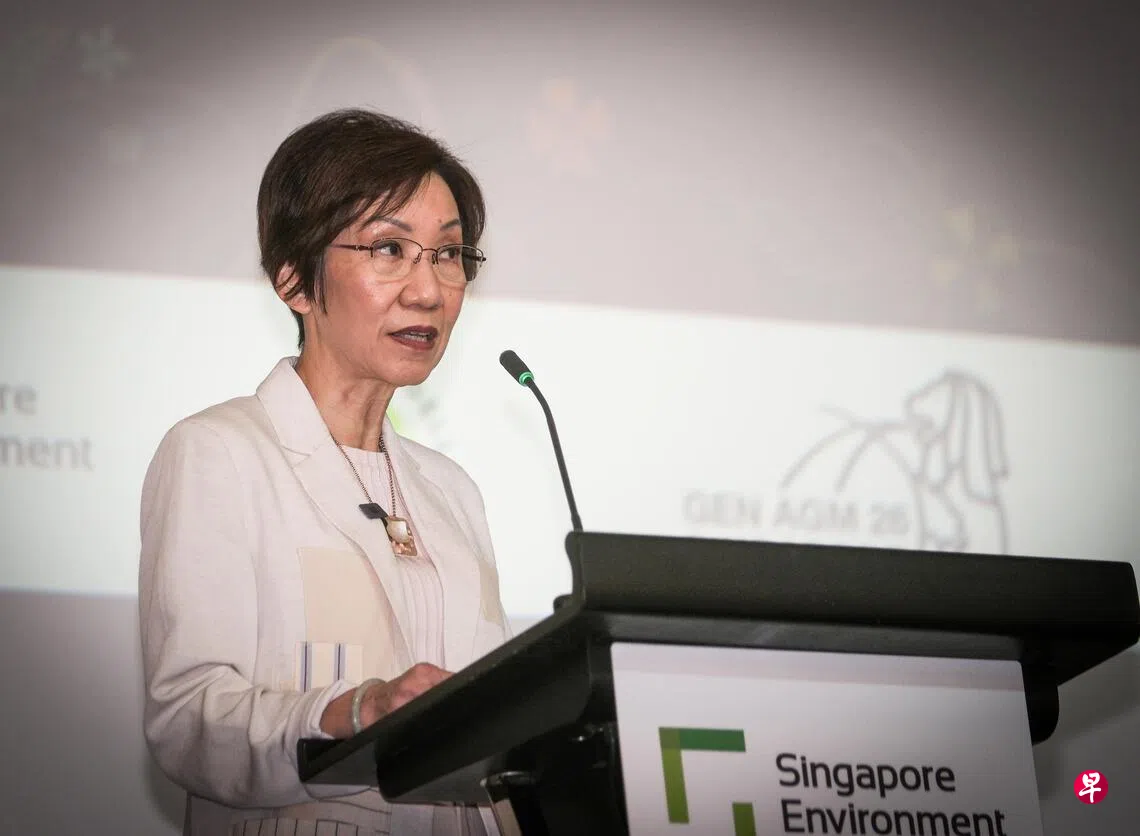
Minister for Sustainability and the Environment Grace Fu outlined two major challenges the government faces in tackling transboundary haze pollution when she attended the Sustainable Procurement Forum on Tuesday (27 October). She also stressed the important role product certification schemes play in environmental protection.
The National Environment Agency (NEA) recently launched an investigation into transboundary haze, issuing preventive measures notices to ten companies operating in Indonesia and directing them to take action to extinguish forest and peatland fires. It also issued legal notices to ten locally registered companies, requiring them to disclose all their affiliated companies in Singapore and Indonesia, as well as the land concessions they operate in Indonesia.
In her speech, Fu identified two practical challenges in cross-border enforcement. The first is the need for overseas companies to cooperate with investigations. Legal notices issued under Section 10 of the Transboundary Haze Pollution Act enable the Singapore government to obtain the information needed to establish the facts and determine corporate responsibility. However, it is difficult for the government to exercise Singapore’s enforcement powers in other countries.
Enforcement becomes even more difficult if overseas companies refuse to comply with the notices and their senior executives do not enter Singapore.
Fu: Commitment to cooperation with Indonesia unchanged amid review of laws
Fu said Singapore’s enforcement framework should not allow companies to obstruct investigations by refusing to cooperate or choosing not to enter Singapore. However, she also stressed that mutual cooperation was vital.
“For example, we have consistently expressed openness to working with Indonesian authorities who share our common objective of holding responsible companies accountable. This position will not and has not changed, even as we press ahead to make adjustments,” Fu said.
Another challenge in investigating transboundary haze pollution is establishing the links between companies, who owns and controls the land and what measures they have taken to prevent and extinguish fires. Much of this information is held overseas, making it difficult for the Singapore government to obtain.
Even when overseas companies provide information or documents, verifying their authenticity is extremely difficult. The authorities also face difficulties entering other countries to investigate or gather evidence.
Fu said the government was reviewing how to strengthen existing laws, including the Transboundary Haze Pollution Act, and would amend existing legislation or introduce new laws where necessary. “The objective is to address enforcement gaps, strengthen corporate accountability, and enhance our ability to investigate and take decisive action against those responsible for transboundary haze.”
If those responsible for the haze have interests in Singapore, other avenues are available to hold them accountable, including legal and regulatory measures, as well as scrutiny involving investors, financiers and markets. Greater scrutiny has already prompted some companies to respond publicly and clarify their positions.
Fu said, “The broader point is that companies are accountable not only to regulators. Investors, financiers, customers and the wider public increasingly expect companies to demonstrate responsible environmental practices.”
Fu stressed that companies must take responsibility for the environmental impact of their operations and supply chains. At the same time, while ecolabels and green procurement can reinforce responsible behaviour by creating market demand for products that are produced sustainably, credible standards must be backed by evidence and accountability.
She explained that certification systems must ensure certified companies continue to comply with environmental standards. In the case of transboundary haze, the Singapore Environment Council has stepped up oversight, requiring companies to submit additional reports and undergo supply chain checks. Companies that fail to meet the requirements could have their certification under the Enhanced Singapore Green Labelling Scheme (SGLS+) suspended.
Haze from forest fires in Indonesia continues to spread, blanketing several countries in the region. However, Singapore’s air quality has improved in recent days as wind directions have changed.
According to the NEA’s forecast, Singapore’s 24-hour Pollutant Standards Index (PSI) on Wednesday (28 October) is expected to range between 60 and 90, within the moderate range. Winds are expected to shift to east-south-easterly or south-south-easterly on Thursday (29 October) and Friday (30 October). While this could bring smoke from southern Sumatra in Indonesia to Singapore, showers forecast for the region could help reduce the likelihood of haze.
