

Actively developing international carbon markets will not only help Singapore offset emissions more cost-effectively and achieve net zero by 2050, but also give it an early advantage in becoming a carbon services and trading hub.
Promoting carbon market cooperation is one of Singapore’s key priorities at the 31st UN Climate Change Conference (COP31). Experts interviewed said this could bring economic benefits as well as help the country tackle climate change.
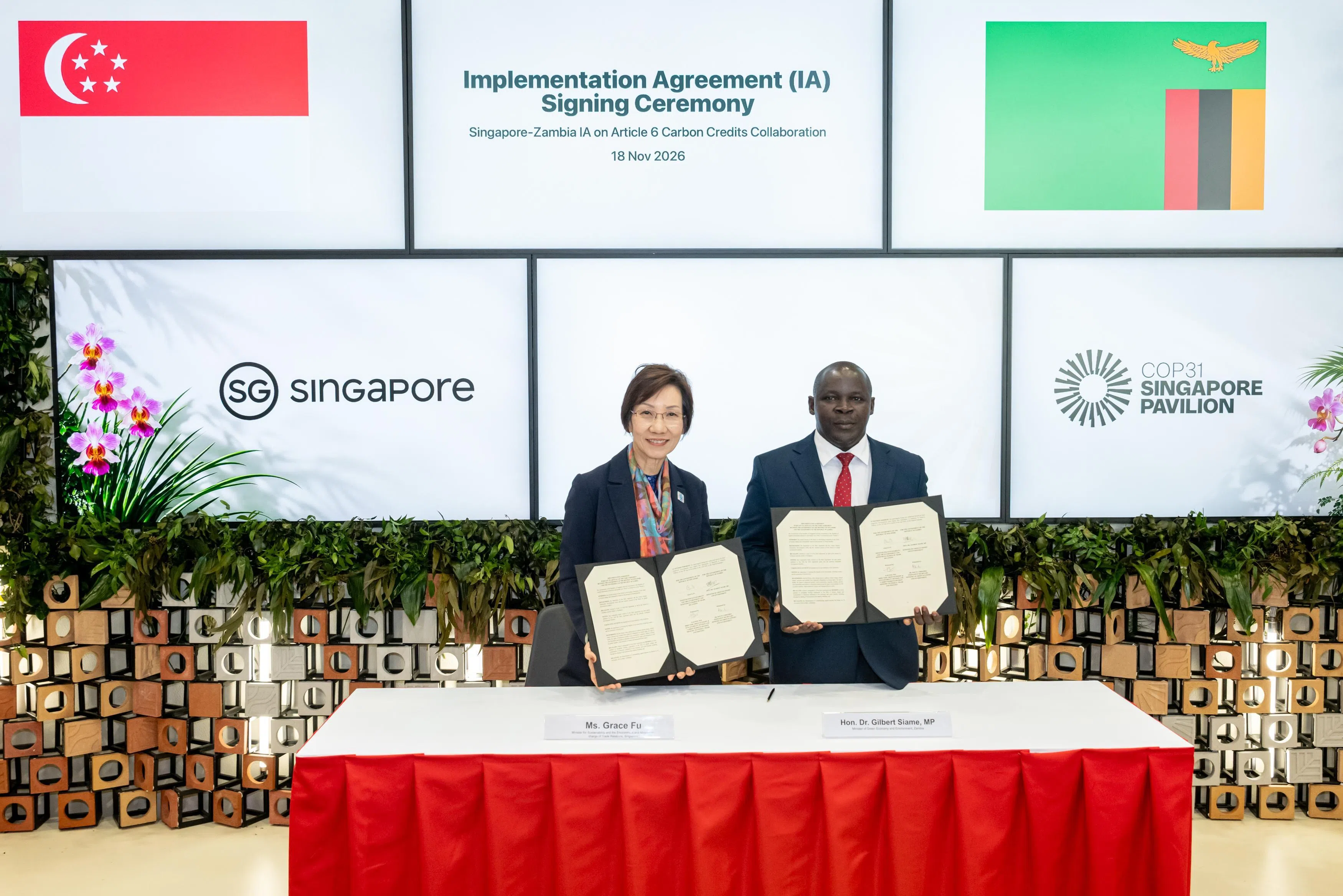
Singapore has advanced bilateral carbon market cooperation with five countries during the conference, including signing an implementation agreement on carbon credit cooperation with Zambia on Wednesday (18 November). The “Singapore Green Cooperation Programme”, announced on Tuesday (17 November), focuses on helping developing countries build their capabilities to participate effectively in carbon market trading.
Singapore aims to reduce its greenhouse gas emissions to between 45 million and 50 million tonnes by 2035, after they peak at 64.43 million tonnes in 2028, and ultimately achieve net zero by 2050.
In an interview with Lianhe Zaobao, Tan-Soo Jie Sheng, Assistant Professor and Director at Institute for Environment and Sustainability of the Lee Kuan Yew School of Public Policy, said Singapore has limited land for renewable energy, relatively few domestic opportunities for nature-based carbon removal, and a large and growing number of energy-intensive industries. As such, achieving net zero entirely through domestic emissions reductions would be extremely costly. International carbon markets offer a way to reduce these costs.
“Many developing countries have considerable potential to reduce emissions but lack the regulatory frameworks, technical capabilities and financing needed to generate high-quality carbon credits. By helping these countries build their capabilities, Singapore is effectively expanding the potential supply of credits, which could eventually lower the cost of meeting its own climate targets.”
Besides an adequate supply of carbon credits, a well-functioning carbon market also needs stable demand.
Last year, Singapore jointly launched the “Coalition to Grow Carbon Markets” with the UK and Kenya to boost demand from businesses and the private sector for high-quality carbon credits. These credits must undergo rigorous verification and deliver real, lasting emissions reductions.
Lee Bing Yi, partner in Financial Services Assurance, Sustainability and Climate Change at PwC Singapore, said initiatives that aggregate demand, such as the Coalition to Grow Carbon Market, can address the other side of the equation.
He explained: “Carbon-project developers need confidence that there will be buyers before committing significant upfront capital. More predictable demand can provide the revenue visibility needed to make projects bankable.”
Lee said that ultimately, the opportunity for Singapore is to help connect demand and capital with credible climate projects across the region.
Singapore and Zambia sign implementation agreement on carbon credit cooperation
Since 2022, Singapore has embarked on bilateral carbon market cooperation with about 30 countries. Some countries that previously signed memorandums of understanding with Singapore have also gradually moved towards deeper cooperation.
Bilateral carbon market cooperation generally begins with the signing of a memorandum of understanding to establish the intent and scope of cooperation. The two sides then enter detailed negotiations and sign a legally binding implementation agreement, establishing a framework for cross-border transfers of carbon credits.
Zambia signed a memorandum of understanding with Singapore in 2024, followed by an implementation agreement on Wednesday. This is Singapore’s 14th implementation agreement and its fourth with an African country.
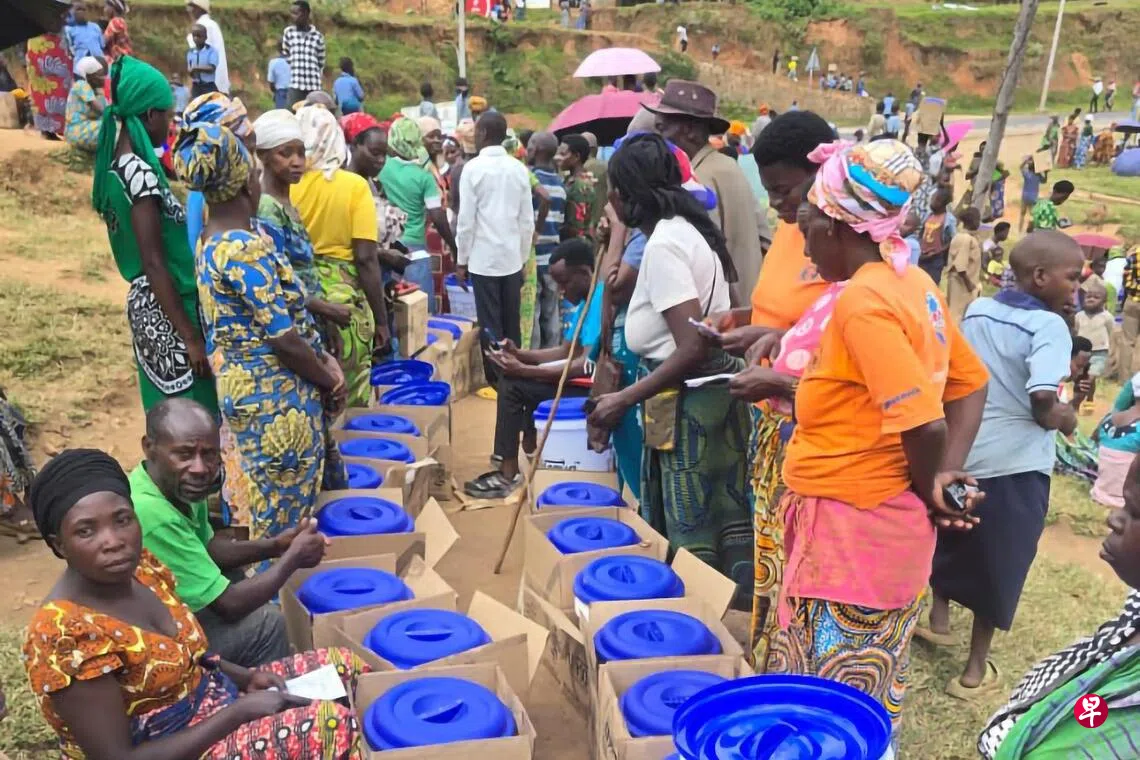
Singapore also authorised its first carbon credit project during the first week of COP31. The project promotes the use of ceramic water filters in Rwanda to reduce carbon emissions from burning charcoal to boil water.
Melissa Low, Research Fellow at the Centre for Nature-based Climate Solutions, National University of Singapore (NUS), said the authorisation of its first project in Rwanda is particularly significant, as it marks a transition from negotiating bilateral agreements towards implementing projects that can potentially generate internationally transferred mitigation outcomes.
“Singapore's broader opportunity is to demonstrate how international cooperation can support its own climate ambitions while contributing to mitigation and sustainable development elsewhere. Whether that potential is realised will ultimately depend on the quality of implementation, transparency and accountability.”
