

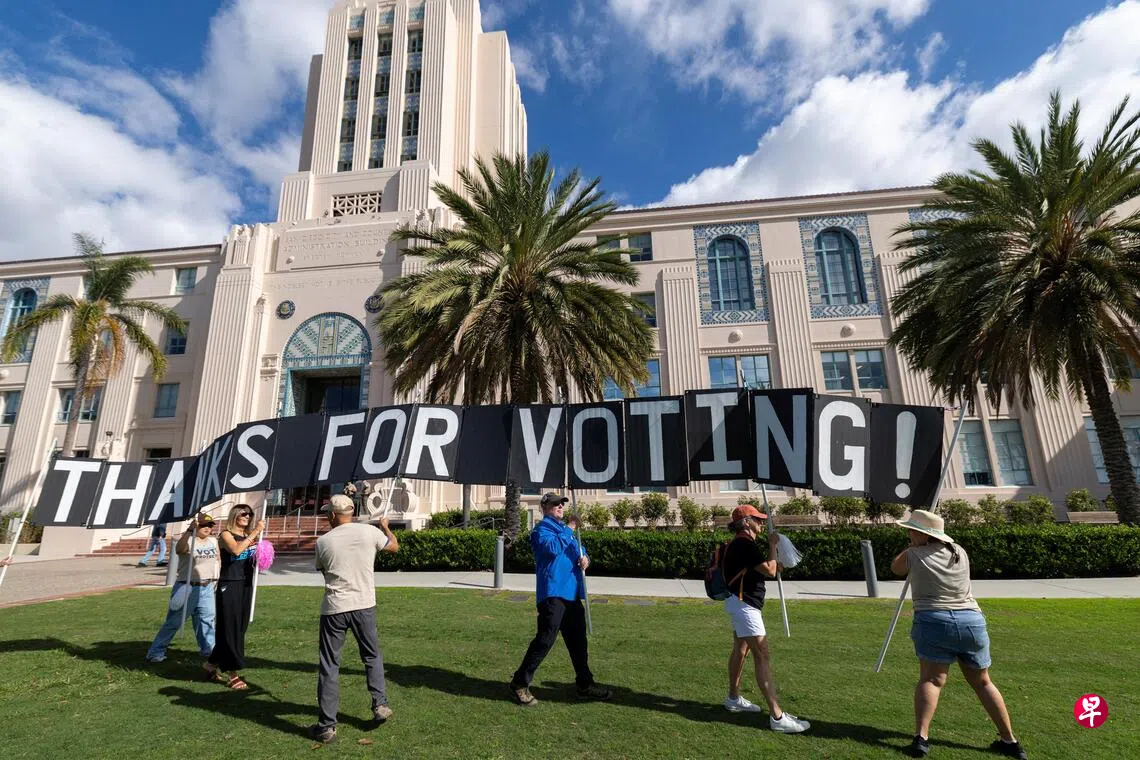
A wave of recriminations has swept through the US Republican Party after it lost control of both houses of Congress in the midterm elections, with most of the blame directed at the Trump administration. Allies of President Donald Trump and political strategists are calling on him to shake up White House staffing, restore discipline and abandon policies seen as responsible for the crushing defeat, including the Iran war and tariffs.
Veteran Republican strategist John Feehery described the midterm election results as a huge disaster for Trump. Feehery told Reuters, “He needs to clean house. Every day from this point forward, he's becoming more and more lame.”
Some party elders have also publicly criticised the Republicans. In a commentary in The Wall Street Journal, Texas Senator John Cornyn criticised the party for a series of avoidable political mistakes, including backing the scandal-plagued Ken Paxton to challenge him in the primary and ultimately run as the Republican candidate for the Texas Senate seat.
Mitt Romney, the Republican presidential candidate in 2012, also lambasted the party’s candidates for blindly supporting Trump’s policies, including erratic tariffs and the impulsively launched war with Iran.
White House officials said morale had hit rock bottom, with senior officials preparing for staff departures, a possible cabinet reshuffle and a series of investigations by the Democrats.
Some Republicans worry that Trump’s policies have become a political liability, particularly for potential successors eyeing the 2028 presidential election.
US Vice-President JD Vance is seen as the most likely candidate to succeed Trump. In a social media post on Wednesday (4 November), he blamed the Republican defeat on the Iran war, the cost-of-living crisis and US relations with Israel, seemingly seeking to distance himself from Trump.
Republican strategists and party officials said such efforts to distance themselves from Trump could become increasingly common if Republicans conclude that his long-standing influence over the party’s voters is waning.
Yet, facing a voter backlash and criticism from within his party, Trump once again dwelt on renovation projects in the capital during his first public appearance after the election on Wednesday. One Republican political consultant said, “If Trump spends the next two years talking about this same shit, we will get shellacked again in the next election.”
Poll: 70% of voters want Congress to strengthen checks on Trump
An Associated Press survey of voters across all 50 US states found that most were tired of and annoyed with Trump, who has been at the centre of American politics for more than a decade. About 70% of respondents wanted Congress to strengthen checks on the president.
Trump’s failure to deliver on key campaign promises, particularly curbing inflation, clearly hurt the Republicans’ electoral prospects. Two-thirds of voters surveyed believed his policies had instead worsened the US economy, and about 80% of these voters backed Democratic candidates.
More than half of voters said government corruption also played a key role in their voting decisions. Voters widely believed that Trump cared more about his own wealth and lavish lifestyle than about people’s needs.
Trump’s emphasis on loyalty, and his support for candidates whose character or experience was in question, also cost Republicans victories in red states they should have comfortably won.
However, while voters hoped the Democrats could bring change, their opinion of the party was not much better. About half of voters viewed the Democrats favourably, slightly more than the 40% who had a favourable view of the Republicans.
Republican megadonors’ spending strategy fails
Meanwhile, the Democrats’ sweep of both the House and Senate underscored the complete failure of Republican megadonors’ spending strategy. In several races won by Democrats, outside spending by conservative groups far exceeded that of liberal groups.
Logan Phillips, founder of election forecasting website Race to the White House, wrote on X: “This might have been the biggest defeat for big money in American political history.”
According to campaign finance tracker OpenSecrets, billionaire Elon Musk donated nearly US$500 million (about S$638 million) to Republican campaigns in this election, making him the largest individual donor in a single federal election cycle since 2010. More than US$200 million went towards supporting Paxton, but he still lost to his Democratic opponent James Talarico.
