

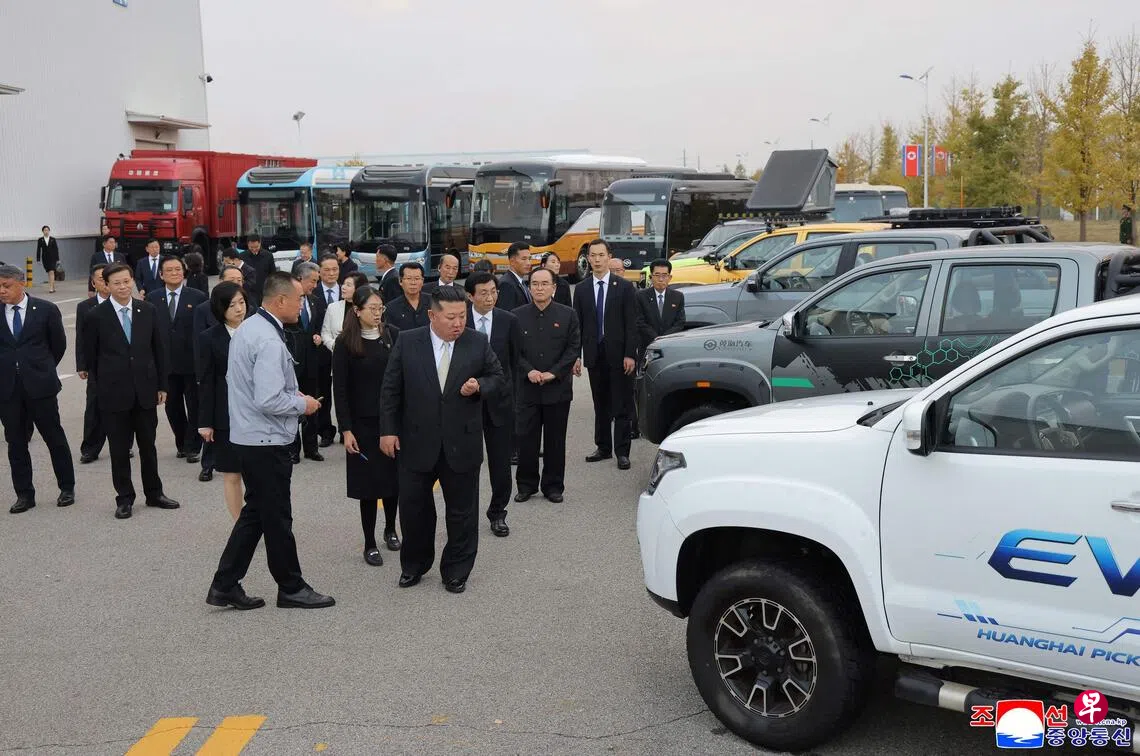
North Korean leader Kim Jong Un made a surprise visit to China last Saturday (24 October), his first trip to the country without meeting Chinese President Xi Jinping.
South Korean commentators dubbed it a visit with “three noes”: no meeting with Xi, no travelling in his private train, and no overnight stay in China. Analysts say the trip was intended to consolidate traditional ties and expand economic cooperation with China. It highlights North Korea’s accelerating shift towards a strategy of relying on Russia for security and China for its economy, building leverage for future dealings and diplomatic negotiations with the US.
This was Kim’s sixth visit to China since taking power. According to the Korean Central News Agency (KCNA), Kim travelled in a black Maybach, crossing the New Yalu River Bridge (officially opened to traffic on 15 October) into Dandong in China’s Liaoning province. He was welcomed by Wang Huning, a member of the Chinese Communist Party’s (CCP’s) Politburo Standing Committee and chairman of the Chinese People’s Political Consultative Conference.
Kim then visited the Memorial Hall of the War to Resist US Aggression and Aid Korea, attended a luncheon hosted by China, and toured the Huanghai Automobile factory before returning to North Korea by car that evening.
The New Yalu River Bridge, which links Dandong with North Korea’s Sinuiju, was completed in 2014 but opened to traffic only after a delay of nearly 12 years. Kim’s decision to use the crossing just nine days after its opening was widely seen as a strong signal of Pyongyang’s eagerness to expand cross-border trade with China.
The Huanghai Automobile factory, about 1.8km from the bridge, began as a vehicle repair facility for the Chinese People’s Volunteers during the Korean War. Analysts say Kim’s choice of destination symbolically reaffirmed the two countries’ “blood alliance”, while also reflecting practical considerations such as improving transport within North Korea and even attracting Chinese tourists.
Park Won-gon, a professor at South Korea’s Ewha Womans University, said Kim’s factory visit and same-day return showed Pyongyang’s desire to translate traditional friendship into economic benefits. They also signalled that senior officials from the two countries could make routine visits by land at any time.
Contrasting coverage reflects Beijing’s reservations
However, the two countries gave the visit markedly different levels of official coverage. South Korea’s JoongAng Ilbo (《中央日报》) noted that Rodong Sinmun (《劳动新闻》), the newspaper of North Korea’s ruling Workers’ Party, devoted its first three pages to extensive coverage of Kim’s trip on Sunday (25 October), publishing 39 photographs.
China’s People’s Daily (《人民日报》), by contrast, carried no photographs of the visit and published only a brief front-page report on Wang’s meeting with Kim.
South Korean ruling party lawmaker Yoon Kun-young said intelligence available to Seoul suggested that China might initially have considered having Premier Li Qiang receive Kim, before ultimately assigning Wang the role. This reflects Beijing’s continuing reservations about a high-profile expansion of economic and trade cooperation with North Korea at this juncture.
Military cooperation between North Korea and Russia has deepened in recent years. In 2024, the two countries signed a Treaty on Comprehensive Strategic Partnership that includes a mutual military assistance clause. North Korea subsequently supplied Russia with troops and ammunition in exchange for much-needed energy, food and advanced military technology support.
South Korea’s Institute for National Security Strategy estimates that Pyongyang received US$7.67 billion to US$14.4 billion (about S$9.824 billion to S$18.445 billion) in economic benefits from its assistance to Russia between August 2023 and December 2025.
Troy Stangarone, a US expert on North Korea’s economy, recently said in Washington that, with the North’s military cooperation with Russia amid the war in Ukraine, expanded economic cooperation with China, and increased revenue from cybercrime, North Korea’s economy may be experiencing its best period since Kim took power.
Even if the war in Ukraine ends, revenue from cooperation with Russia would not immediately decline, as Moscow would still need to replenish its military equipment, he said. Pyongyang could continue to earn substantial revenue for another two to three years before that income starts diminishing.
Although North Korea’s military ties with Russia continue to deepen, China remains an indispensable economic partner. Figures from the Korea Trade-Investment Promotion Agency show that China accounted for 98.2% of North Korea’s total foreign trade last year.
Cho Han-bum, a senior research fellow at the Korea Institute for National Unification, said Russia’s weak manufacturing base meant that military cooperation alone would struggle to stimulate the North Korean economy and improve livelihoods. Pyongyang still needs China to expand trade and develop its economy.
Kim’s visit reflects an effort to consolidate this two-track strategy: relying on Moscow as a security backer and Beijing as an economic engine, while maximising his diplomatic room for manoeuvre between China and Russia.
Notably, Kim made specific mention of the 65th anniversary of the signing of the Treaty of Friendship, Cooperation and Mutual Assistance between North Korea and China. Signed in 1961, the treaty includes a mutual military assistance clause, indicating that Pyongyang still values its traditional security relationship with China even as it deepens cooperation with Russia.
US-China rivalry constrains Beijing’s alignment with Pyongyang
As for why Xi did not meet Kim, South Korea’s Chosun Ilbo (《朝鲜日报》) suggested that both domestic political schedules and Beijing’s diplomatic considerations regarding the US may have played a role.
As China and the US seek to stabilise relations, Beijing may be reluctant to give undue prominence to its strategic cooperation with Pyongyang through a leaders’ summit, lest North Korea become a new complicating factor in US-China relations.
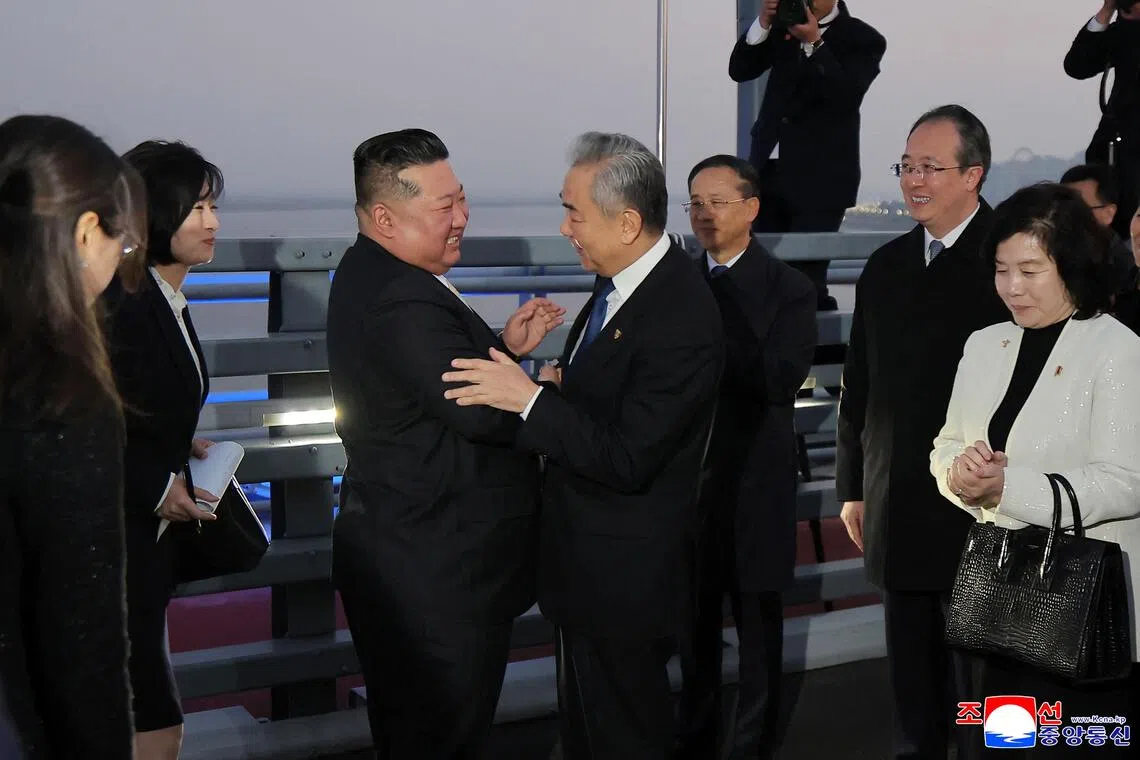
Diplomatic sources in Beijing told Chosun Ilbo that, for Pyongyang, China is an important source of economic support and bolsters its position in talks with the US. For Beijing, maintaining stability on the Korean peninsula is important, but it must also weigh UN sanctions and its own diplomatic interests.
Kim’s lightning visit to China also prompted speculation about whether North Korea and the US were preparing to resume contact. Lawmaker Yoon said it would be premature to view the visit as a prelude to a North Korea-US summit, but it could signal Kim’s fresh diplomatic push with major powers after his 2019 summit with Donald Trump in Hanoi, Vietnam, ended without an agreement.
Over his 14 years in power, Kim has become increasingly adept at diplomacy, seeking strategic room for manoeuvre between China, Russia and the US. His Dandong visit sought Chinese economic support while also demonstrating North Korea’s diplomatic leverage to the US.
Despite an alliance “forged in blood”, North Korea and China ultimately have their own practical interests at heart. Whether Kim can continue to benefit from competing major powers remains a significant test.
